Math Brain Games
Sharpen your numerical skills with engaging math puzzles. From making 24 to mental math sprints, these games boost calculation speed and number sense.
All Math Brain Games


What Are Math Brain Games?
Math brain games are puzzles and challenges designed to exercise your numerical thinking skills. Unlike traditional math homework, these games make arithmetic fun and engaging. They range from simple addition challenges to complex number manipulation puzzles like Make 24.
At MindNest, our math games are designed for all skill levels. Whether you're a student looking to sharpen your calculation speed or an adult wanting to keep your math skills fresh, there's a challenge for you.
Benefits of Playing Math Brain Games
Regular practice with math puzzles offers numerous cognitive benefits:
- Improved calculation speed — Mental math becomes faster and more automatic
- Better number sense — You develop an intuitive understanding of how numbers relate
- Enhanced problem-solving — Math puzzles train you to approach problems from multiple angles
- Increased working memory — Holding numbers and operations in your head strengthens memory capacity
- Greater confidence — Regular practice reduces math anxiety
How Math Games Improve Thinking Skills
Research in cognitive science shows that mathematical reasoning activates multiple brain regions simultaneously. When you solve a Make 24 puzzle, you're engaging your prefrontal cortex for planning, your parietal lobe for numerical processing, and your working memory systems for holding intermediate results.
This multi-region activation is what makes math games such effective brain training. Just 5 minutes of daily practice — like a quick daily math puzzle or a few mental math tricks — can measurably improve your processing speed and numerical fluency.
Popular Math Brain Games on MindNest
Our math section features five different types of challenges:
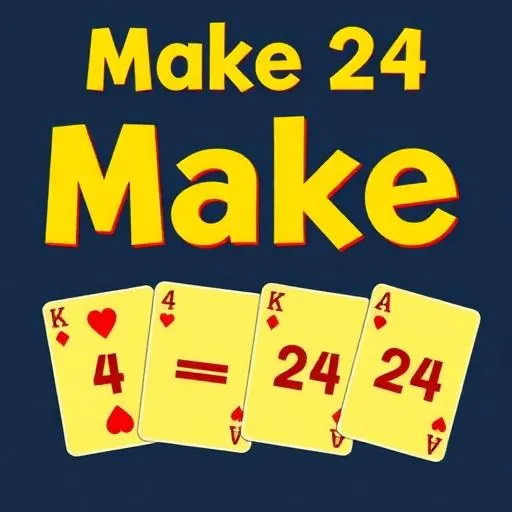
- Make 24 — The classic number puzzle where you combine 4 numbers to reach 24
- Number Pattern — Identify the rule behind number sequences
- Mental Math Speed Test — Race against the clock solving arithmetic
- Fast Math Challenge — Progressive difficulty math problems
- Missing Number — Find the hidden value in equations
Tips for Getting Started
If you're new to math brain games, start with easier puzzles and work your way up. The Missing Number Puzzle is great for beginners, while Make 24 offers a satisfying challenge for experienced players. Try to complete at least one math puzzle in your daily brain workout routine.
Frequently Asked Questions
Are math brain games suitable for kids?
Absolutely! Our math games are designed for ages 10 and up. Younger players can start with Missing Number and Number Pattern puzzles.
Do I need to be good at math?
Not at all. These games use basic arithmetic (+, −, ×, ÷). The challenge is in creative thinking, not advanced mathematics.
How often should I play?
For best results, play daily. Even 2–3 minutes of math puzzles per day can improve your numerical thinking over time. Track your progress with our streak system.